We Have Lots of Helpful Pomegranate Information for You!

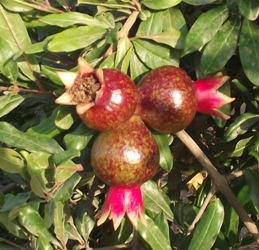
Tons of pomegranate information is packed within these pages, much like the packed pomegranate arils you find inside this amazingly tangy fruit.
Did you know that this fruit is one of the oldest types of fruit mentioned both chinese mythology and folklore? It’s no wonder that it is still one of the best health promoting foods available in many parts of the world today.
Learning about Pomegranates
It’s about the size of a large apple and has a gorgeous deep color that can be either reddish-purple or even a yellowish-orange. The seeds or arils inside are a deep red color and can be used in salads, main dishes, juices, syrups, and much more to maintain energy and provide a natural immune system boost. Pomegranates might also be called: grenade, punic apple, melograno, granatapfel, or melagrana.
Lovely art of pomegranates embrace your space.
Pomegranate Forms
Also referred to by its botanical name, Punicum granatum, the pomegranate is picked and harvested from August through the first few weeks of November. It’s available in markets and stores from September through much of January.
The juice and juice concentrate can be found in many health food stores, markets, and grocery stores throughout the year, so when you can’t find the fresh fruit, you still have a great resource for adding pomegranates to your healthy diet.
Lovely pomegranate fruit art embrace your space.
Pomegranate Information on Choosing a Fresh Pomegranate
How do you know if the fruit is fresh? The fruit should have a good color, feel smooth on the outside, have no obvious blemishes or cuts into the rind, and feel relatively heavy in your hand. Pomegranates naturally have a nice round, rather full appearance, so if they look sunken or dried out, don’t choose that one.
Why Eat Pomegranates?
This delicious fruit is one of the best and most popular health promoting foods available today. Some physicians actually recommend healthy supplements that include pomegranate fruit in some form as part of a well balanced diet.
Pomegranate for children are beneficial for giving a child's immune system a natural boost and giving the child's body the ability to fight potential disease. Your child could develop into a healthier person as he develops and grows!
The best reasons to eat them however are that the arils taste fantastic and are packed with powerful antioxidants that will help you in a myriad of ways to fight disease and potential health issues as you age.
For More Interesting Pomegranate Facts…
Check out our healthy eating guidelines and healthy lifestyle tips if you would like to know more about how this amazing fruit can benefit you and your health. Try this pomegranate inspiration a way of decorating your home with nature and I'm sure you'll also love our pomegranate love story.
We’ll also share with you some helpful tips on pomegranates storage and pomegranate chinese treatments!
Read enough about
pomegranate information and want to discover more about the amazing pomegranate health benefits?